Engaging Kids in Japanese Culture: Temple, Craft & Etiquette Tips 2026
AI-assisted guide, fact-checked against official and primary sources — not a sponsored stay. We don’t claim to have personally visited every place; we verify details, cite official sites, and flag anything you should confirm before you go. How we make these guides →
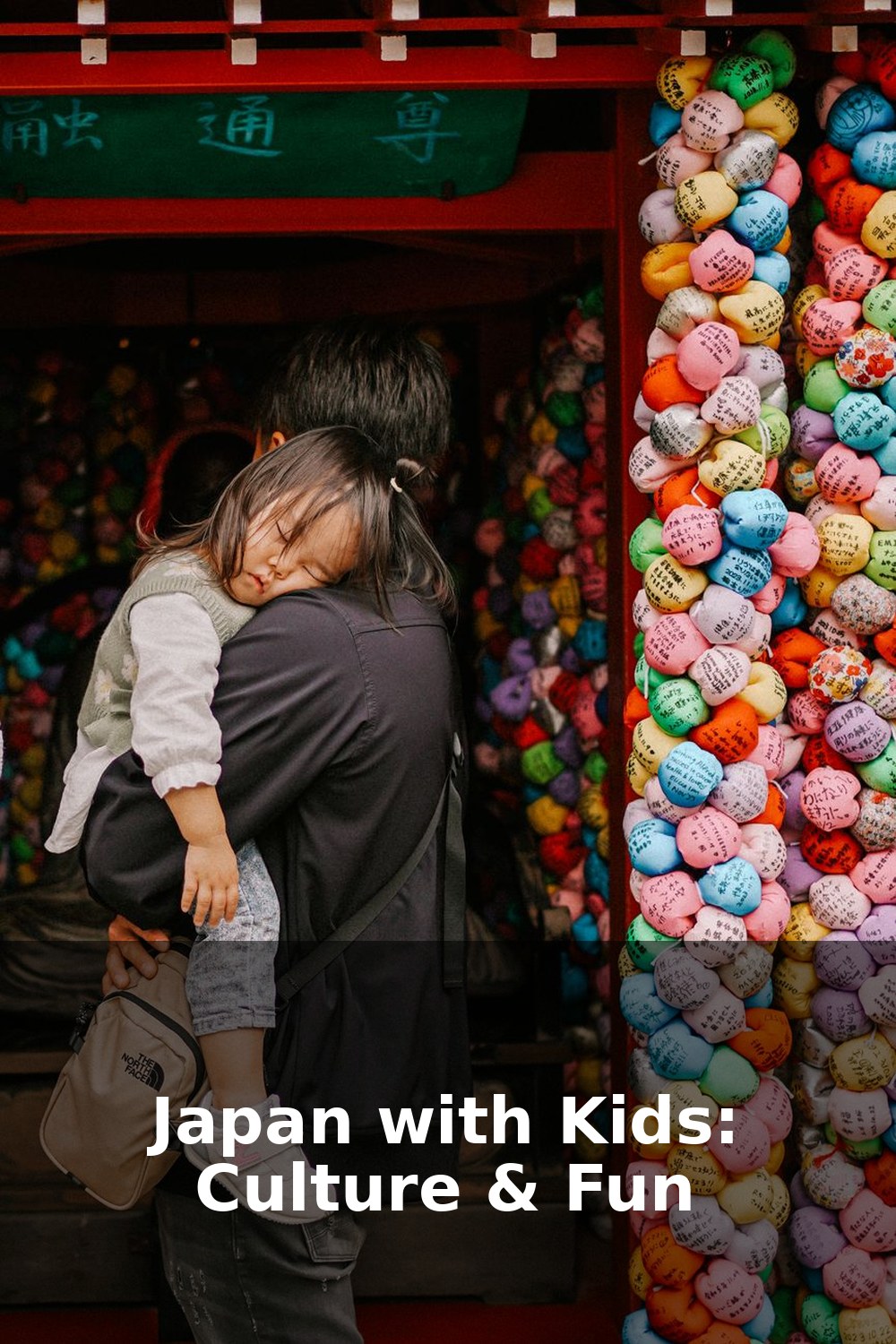
Photo by Kristina Mitina on Pexels
Ready to make Japan unforgettable for your kids? Navigating ancient temples, hands-on crafts, and local etiquette with little ones is simpler than you think. Just remember: a perfectly silent temple visit with a curious toddler is a rare achievement, and that's totally okay!
Here's a quick overview of what you'll find:
- Strollers are tricky on gravel temple paths; a carrier is often best.
- Dedicated nursing rooms (junyūshitsu) are common in large public spaces.
- Many traditional craft experiences (taiken) are available for kids, but often require advance booking on Japanese sites.
- Allergy labeling is strong for packaged foods, but dine-in restaurants are not legally required to provide it.
- Basic etiquette like "Itadakimasu" and quiet public transport makes a big difference.
Temple Visits: Navigating Ancient Grounds with Little Ones
Stepping into a Japanese temple or shrine with kids can feel wonderfully calm. But let's be real: with little explorers, you need practical details. Here's what to expect for accessibility and family-friendly facilities to help your visit go smoothly.
Stroller Access & Rental
Imagine serene temple strolls, but prepare for the reality: many of Kyoto's beautiful temples and shrines have gravel paths, steps, and uneven stones. These can be tough, even for sturdy strollers. For babies and toddlers, a carrier is often your best friend, letting you tackle stairs and crowds with ease.
For instance, the approach to Kiyomizu-dera in Kyoto is quite steep, and while you can push a stroller up the main street, exploring the actual temple grounds is best done with a carrier. In contrast, Senso-ji in Tokyo offers a much more stroller-friendly experience. Its main path, including the bustling Nakamise Street, is wide and flat, making it easy to navigate, especially if you visit early in the morning before the biggest crowds arrive.
If you're in Kyoto and only need a stroller now and then, Kyoto Station rents them for ¥500 per day (as of 2026, confirm on the official site). It's a lifesaver for parents who love a carrier but need wheels for certain adventures.
Nursing Rooms & Diaper Changing Facilities
Japan makes traveling with parents easy! You'll find fantastic dedicated nursing rooms (授乳室 - junyūshitsu) and diaper changing spots in large train stations, department stores, and shopping malls nationwide. These are usually spotless, with private cubicles for nursing or pumping, washing facilities, and often hot water for formula. While many are women-only, more and more are welcoming fathers too.
In Tokyo, the Asakusa Culture Tourist Center, a stunning 8-story building near Senso-ji, has multiple nursing rooms and baby spaces, plus stroller rentals. In Kyoto, check department stores around Shijo Kawaramachi (like Takashimaya) and the Kyoto AEON Mall near Kyoto Station; they're famous for their full-service baby facilities, including hot water for milk. Seriously, these spots are clutch when your little one needs a quick feed or change!
Child Fares (拝観料 - haikanryō)
Budgeting for temple visits? Entrance fees (haikanryō) are generally easy to understand. Most major temples, like Kinkaku-ji and Kiyomizu-dera in Kyoto, have a flat adult fee (e.g., ¥400-¥500 for Kiyomizu-dera, ¥500 for Kinkaku-ji, as of 2026, confirm on the official site). Child discounts aren't always listed online, but younger kids are often free or get a reduced rate at the counter. Always double-check on-site or their official website for current prices.
One major exception: Saihōji (Moss Temple) has a hefty ¥4,000 fee and needs advance online booking. For something easier, Todai-ji in Nara, home to the Great Buddha, charges ¥600 for Great Buddha Hall admission, or ¥1,000 for a combo ticket with the museum (as of 2026, confirm on the official site). Always ask about child rates when you arrive.
Temple Accessibility for Families
| Temple/Area | Stroller-Friendly? | Notes for Families |
|---|---|---|
| Kiyomizu-dera (Kyoto) | Approach Yes, Grounds No | Steep approach road, but temple grounds have many steps/gravel. Use a carrier. |
| Senso-ji (Tokyo) | Yes | Wide, flat main path and Nakamise Street. Best visited early to avoid crowds. |
| Kyoto City Temples (General) | Often No | Many feature gravel paths and steps. A carrier is highly recommended. |
| Asakusa Culture Tourist Center | Yes | Excellent baby facilities, including nursing rooms and stroller rentals. |
Traditional Crafts (体験 - taiken): Hands-On Fun for All Ages
Japan's culture isn't just about quiet contemplation for kids! Hands-on traditional craft experiences, or taiken, are a fantastic way for them to make lasting memories (and souvenirs!).
Activity Types & Pricing
The range of craft experiences is huge! Your family can try pottery, make traditional washi paper, learn lacquerware, or even try kumihimo braiding, gold leaf, indigo dyeing, woodworking, and cloisonné. There's an activity for every interest, even for kids who typically find museums... less exciting.
For aspiring potters, a "children only" pottery experience in Tokyo's Kyodo area is suitable for ages 4 and up. Prices start from around ¥3,500, including rental items (as of 2026, confirm on the official site). Do note that English support might not be available at all local workshops, so booking via their Japanese site or with assistance might be necessary.
If you're in Kyoto, consider a parent-child weaving experience focusing on Nishiki textiles. Located near Kinkakuji Temple, this hand-weaving workshop is suitable for preschoolers and costs around ¥3,500 (tax included) for approximately 1.5 hours (as of 2026, confirm on the official site). Participants can weave a 10cm square silk fabric – a perfect keepsake!
Beyond individual workshops, Arts Council Tokyo has awesome programs: "Kids Traditional Performing Arts Experience" (キッズ伝統芸能体験) and "Traditional Culture and Performing Arts Experience Program for Kids." These let children learn various Japanese performing arts from pros, running typically from September to March or May to February. They're mostly school-based, but direct tourist participation might be an option if you inquire. It’s a truly special peek into Japan's performing arts!
Craft workshop prices vary. Many of these activities, along with skip-the-line tickets for popular attractions, can be found and booked in advance. Book skip-the-line family tickets & experiences on Klook.
Reservation Steps
For most craft experiences, especially kid-focused ones, booking ahead is highly recommended (or even required!). Many places handle reservations via their Japanese websites or phone. For programs like the "Kids Traditional Performing Arts Experience," inquiries and applications are usually by email, often needing two weeks' notice. Plan ahead so your kids don't miss out on the fun!
Family-Friendly Etiquette: Navigating Japan with Grace
Learning and using basic Japanese etiquette can really boost your family's travel experience. It shows respect for local customs and often leads to warmer, more memorable interactions.
Dining Etiquette
Dining in Japan is more than just eating; it's a cultural practice emphasizing gratitude. Children are taught from a young age to say "Itadakimasu" (いただきます) before meals to express thanks for the food and those who prepared it, and "Gochisousama" (ごちそうさま) afterwards. Encourage your kids to try these phrases! Children are also encouraged to hold their dishes properly, eat carefully without spilling, and avoid talking with food in their mouths.
Dining out with kids in Japan is surprisingly easy. Many hotels and restaurants are super accommodating, offering children's chairs (ベビーチェア), kid-sized tableware, and even warm milk. Some spots might even let you bring your own baby food – just ask politely first!
Public Manners
Japanese elementary school kids learn core manners from day one: cheerful greetings, making eye contact, listening well, and consistently using "thank you" and "I'm sorry." These small gestures truly make a difference.
On public transport, such as trains and buses, the expectation for quiet is high. Children are taught not to speak loudly, to offer seats to others who may need them more, and to always take their trash with them. These are great habits to encourage in your own children while you're there. For a deep dive, check out cultural workshops. For instance, the "日本現代作法会" (Japan Gendai Sahokai) offers 2-hour English courses on Japanese manners, covering greetings, tea ceremony etiquette, dining protocols, and proper shrine visits. These cost ¥5,000 per person (free for infants under 5) and include a certificate and souvenir – a fantastic way to learn the ropes (as of 2026, confirm on the official site).
Allergy Labeling Rules (アレルギー表示 - arerugī hyōji)
Food allergies are a major concern for many parents, and Japan has a strong system for packaged foods. The Food Labeling Act (食品表示法 - shokuhin hyōji hō) requires specific allergens to be displayed.
- Mandatory Allergens (特定原材料 - tokutei genzairyō): As of April 1, 2026, there are 9 mandatory allergens that must be displayed on packaged processed foods: shrimp, crab, walnuts, wheat, buckwheat, eggs, milk, peanuts, and cashew nuts. (Note: Walnuts became mandatory in April 2025, and cashew nuts in April 2026, with grace periods for manufacturers to comply.)
- Recommended Allergens (特定原材料に準ずるもの - tokutei genzairyō ni junzuru mono): There are 20 other allergens for which labeling is recommended, including almonds, abalone, squid, salmon roe, orange, kiwi fruit, beef, sesame, salmon, mackerel, soybeans, chicken, banana, pork, pine nuts, peaches, yams, apples, gelatin, and pistachios (pistachios were added in April 2026).
Important Note for Dining Out: This is crucial for parents. These detailed labeling regulations do not apply to dine-in restaurants (外食 - gaishoku) or prepared foods sold face-to-face in stores (中食 - chūshoku), such as bento boxes or deli items. While some establishments may voluntarily provide allergy information, it is not legally regulated in the same way as packaged goods. Parents with children who have allergies should exercise extreme caution and directly inquire about ingredients when eating out. Having allergy cards in Japanese can be very helpful.
Japanese Allergen Labeling Overview (As of 2026)
| Category | Mandatory Allergens (9) | Recommended Allergens (20) |
|---|---|---|
| Examples | Shrimp, Crab, Walnuts, Wheat, Buckwheat, Eggs, Milk, Peanuts, Cashew Nuts | Almonds, Abalone, Squid, Salmon Roe, Orange, Kiwi Fruit, Beef, Sesame, Salmon, Mackerel, Soybeans, Chicken, Banana, Pork, Pine Nuts, Peaches, Yams, Apples, Gelatin, Pistachios |
| Applies To | Packaged processed foods only | Packaged processed foods only |
| Key Caveat | Does NOT apply to dine-in restaurants or prepared deli foods. Always inquire directly. | Does NOT apply to dine-in restaurants or prepared deli foods. Always inquire directly. |
FAQ
Is Japan stroller-friendly for temples and shrines?
Many traditional Japanese temples and shrines, especially in Kyoto, have gravel paths and numerous steps, making them challenging for strollers. A baby carrier is often more practical. Larger city temples like Tokyo's Senso-ji can be more stroller-friendly on main paths.
Where can I find nursing rooms and diaper changing facilities in Japan?
You'll find excellent nursing rooms (junyūshitsu) and diaper changing facilities in large train stations, department stores, and shopping malls across Japan. Many include private nursing cubicles and hot water for formula. The Asakusa Culture Tourist Center in Tokyo is a great example.
Are there special entrance fees for children at Japanese temples?
At many major temples like Kinkaku-ji and Kiyomizu-dera, younger children are often free or have a reduced rate, though this isn't always explicitly advertised. Always inquire at the ticket counter for child-specific pricing.
What kind of traditional craft experiences can kids do in Japan?
Children can participate in a wide range of traditional craft experiences (taiken) such as pottery, washi paper making, weaving, gold leaf application, and indigo dyeing. These activities often require advance booking, sometimes through Japanese websites.
What are key dining etiquette phrases for kids in Japan?
Teach your children "Itadakimasu" before eating and "Gochisousama" after meals to express gratitude. These phrases are fundamental to Japanese dining culture and show respect.
How do allergy labeling laws work in Japanese restaurants?
Japan has mandatory allergen labeling for 9 items (e.g., wheat, milk, eggs, peanuts) and recommended labeling for 20 others on packaged processed foods. However, these regulations do not apply to dine-in restaurants or prepared foods sold face-to-face. Always inquire directly and exercise caution when eating out with allergies.
Can I rent a stroller in Japan?
Yes, places like Kyoto Station offer stroller rentals for a daily fee (e.g., ¥500, as of 2026, confirm on the official site), which can be convenient for specific days or locations.
With a little preparation, your family's journey into Japanese culture – through temples, crafts, and everyday etiquette – will be a truly memorable adventure.