Japan Packing List for Families (2026): Kids' Travel Essentials
AI-assisted guide, fact-checked against official and primary sources — not a sponsored stay. We don’t claim to have personally visited every place; we verify details, cite official sites, and flag anything you should confirm before you go. How we make these guides →
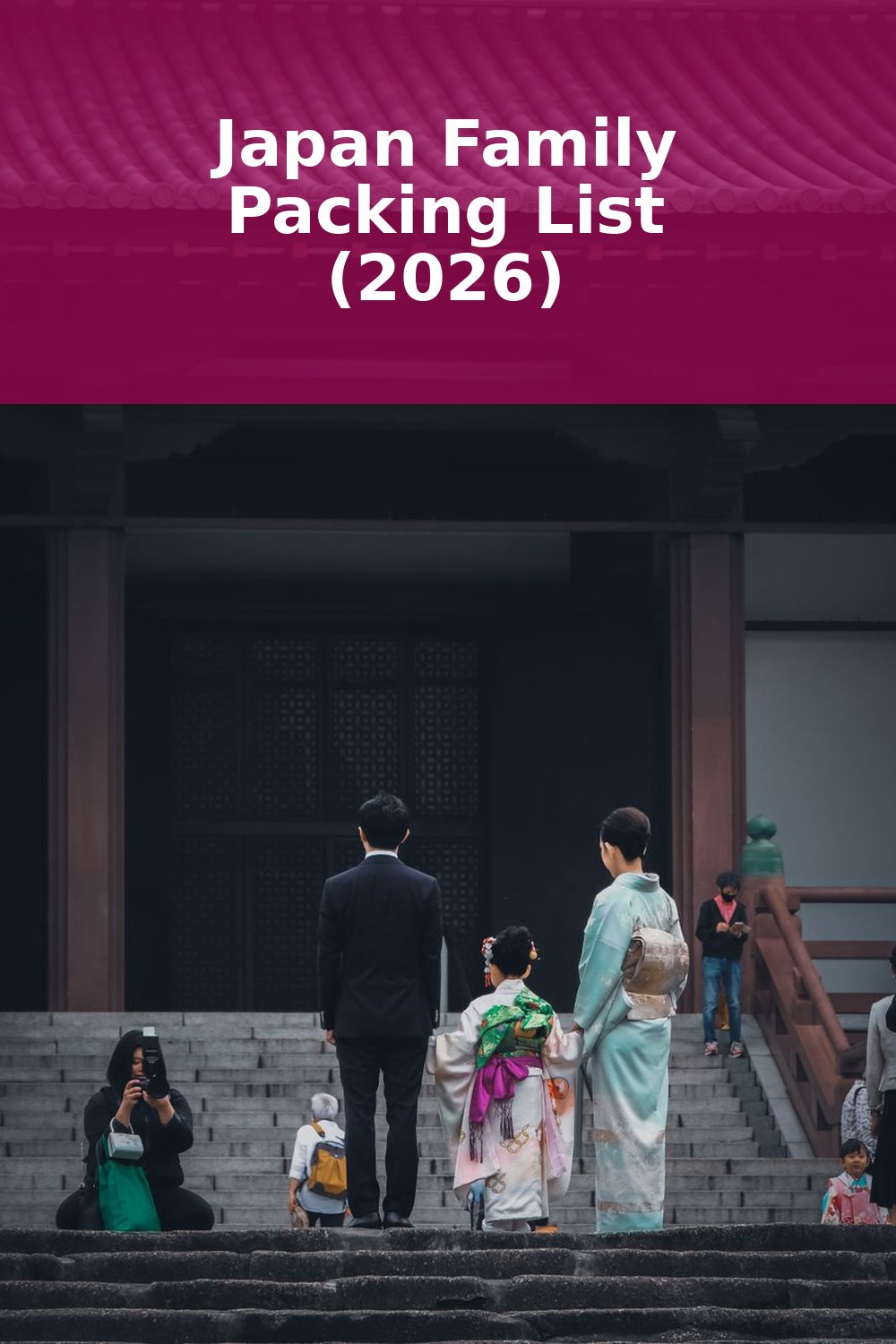
Photo by Dimas Utomo on Pexels
Planning a family trip to Japan in 2026? Smart packing is your secret weapon. Focus on versatile clothing, essential medications, and clever strategies for baby gear to keep everyone happy and minimize stress – especially when your 4-year-old discovers a new snack that saves the day.
- Pack lightweight layers. Japan's weather can swing wildly, even in one day, so adaptable clothing is essential.
- Bring all specific medications and a basic first-aid kit. Japanese pharmacies might not carry your familiar brands.
- Pack a few days' supply of diapers, wipes, and formula; after that, plan to purchase more from dedicated baby stores like Akachan Honpo.
- A compact, foldable stroller or a comfortable carrier will make navigating Japan's bustling cities and public transport a breeze.
- Always have a stash of familiar snacks – they're invaluable for jet lag and long travel days.
Packing Essentials: What to Bring from Home
Clothing: Layers are Your Best Defense
Japan's weather is a chameleon, shifting dramatically with seasons, regions (Tokyo vs. Kyoto), and even within a single day. Layers are your best defense. Think quick-dry fabrics that can be washed and air-dried overnight. Even in summer, evenings can be cool, especially in mountainous areas, or when the Shinkansen air conditioning is unexpectedly powerful. Consider packing one slightly warmer layer per person, regardless of the season, for these situations.
Health & Safety: Preparing for the Unexpected
Don't let a minor sniffle slow you down. A small, well-stocked medical kit is your travel insurance against everyday bumps and colds. Bring any prescription medications your child needs, along with copies of prescriptions. A basic first-aid kit should include plasters, antiseptic wipes, pain and fever relief suitable for children, and any specific allergy medications. Sunscreen and insect repellent are also important, especially for outdoor excursions to places like parks or temples. Always consult your pediatrician before travel for personalized advice on your child's health needs and any required vaccinations or medications.
Comfort & Familiarity: Your Child's Lifelines
Japan bursts with new sights and tastes, but a touch of home can be a lifesaver. A beloved small toy, a special blanket, or a favorite book offers immediate comfort on long journeys or in unfamiliar rooms. For older kids, a portable charger and a small tablet (loaded with movies!) are priceless for peaceful train rides. And about snacks: Japan offers incredible local delicacies, but having familiar favorites can be a lifesaver during a jet-lagged 4 AM wake-up or a lengthy museum visit – trust us, snacks are prime bargaining currency when you're facing a toddler meltdown.
Baby & Toddler Gear: Rent or Bring?
Diapers, Wipes & Formula: Local Shopping Made Easy
Pack a few days' worth of diapers, wipes, and your preferred formula to get settled. Beyond that, leave the bulk at home! For a wide selection of baby and maternity products in Japan, stores like Akachan Honpo (アカチャンホンポ) are a fantastic resource. These large retail chains carry approximately 400 to 1000 baby-related items, including various brands of diapers, formula, baby food, and clothing. Many Akachan Honpo stores also offer tax-free services for tourists (as of 2026, confirm on the official site), making them an economical choice for replenishing your stock.
Strollers & Carriers: Navigating Japan's Cities
Japan's vibrant cities, with their busy train stations and sometimes crowded sidewalks, are much easier to navigate with a lightweight, foldable stroller. Many families swear by compact, umbrella-style strollers for public transport. A baby carrier is another excellent choice, especially for tackling stairs, weaving through crowds, or simply letting your little one see the world from your perspective.
Prefer to travel light? You have several convenient options for stroller rentals:
- Airport Stroller Rentals: Strollers can be borrowed for free at information counters throughout Narita International Airport (NRT) terminals, to be returned to an information counter after use. For arriving passengers, they can be used after immigration. At Haneda Airport (HND), paid stroller rental for use outside the airport is available at some locations (e.g., 1F General Information in Terminal 1, 1F Arrival Lobby in Terminal 2) from 10:00 AM to 6:00 PM (as of 2026, confirm on the official site). Note this paid service is not available at Terminal 3. Kansai International Airport (KIX) also offers strollers for rent at various information counters, excluding international departure areas.
- Private Stroller Rental Services: Companies like Monokari offer stroller rentals starting from one day, including popular models like Cybex Melio and Cybex Libelle, with options for airport pickup nationwide and same-day pickup at their Shinjuku stores. Delivery is typically free, with the shortest receipt time being next-day. Nice Baby also operates an airport stroller rental service with pickup and return at JAL ABC counters (e.g., Haneda Terminal 3, Narita Terminals 1 & 2). Consider the convenience of renting directly upon arrival to save luggage space: Rent a stroller, car seat & baby gear in Japan (no lugging it from home).
Getting Around: Child Fares & Public Facilities
Train Travel with Kids: JR & Shinkansen Fares
Japan's world-class train network makes family travel surprisingly smooth, but knowing the child fare rules is crucial. Imagine your 7-year-old proudly tapping their own IC card!
JR Child Age Classification (as of 2026, confirm on the official site)
| Category | Age | Notes |
|---|---|---|
| Adult (おとな) | 12 years and older | A 12-year-old still in elementary school is considered a "Child" |
| Child (こども) | 6 to under 12 years old | Typically elementary school students |
| Toddler (幼児 - Yōji) | 1 to under 6 years old | Includes 6-year-olds not yet in elementary school |
| Infant (乳児 - Nyūji) | Under 1 year old |
Fare Rules:
- Children (こども): Pay half the adult fare for basic tickets (乗車券), express tickets (特急券), and reserved seat tickets (指定席券). Fares are rounded down to the nearest 10 yen (for IC cards, it's half rounded down to the nearest 1 yen).
- Toddlers (幼児) and Infants (乳児): Generally travel free.
- Exceptions for Toddlers/Infants (when a Child's ticket is required): When an infant or toddler occupies a reserved seat, Green Car seat (excluding non-reserved Green Cars), or a sleeper berth independently. Also, if an adult or child passenger is accompanied by more than two toddlers, the third toddler and onwards will require a child's ticket (infants are not counted in this limit). A child's ticket is also required if a toddler travels alone.
- Special Fares: Green Car tickets (グリーン券), GranClass tickets, sleeper tickets (寝台券), and liner tickets (ライナー券) for children are the same price as adult tickets.
When booking Shinkansen e-tickets through services like "Ekinet," child seats can be linked to a "Child Suica" or "Child PASMO" IC card for ticketless boarding. An adult IC card cannot be used for a child's seat. Child Suica cards can be purchased at JR East Midori-no-Madoguchi (ticket offices) within Suica areas or Shinkansen stations. For seat reservations for toddlers, select the "Child" category as there is no specific "Toddler" button on ticket machines.
Nursing Rooms & Diaper Changes: "Akachan no Eki" & "Akachan Flat"
Japan offers surprisingly extensive child-friendly facilities, especially for infant care. Many municipalities operate "Akachan no Eki" (Baby Stations or Rest Stops) programs. These facilities typically offer a nursing space, diaper changing area, and hot water for formula, with some even providing baby keepers. These facilities are often accessible even if you are not using other services at the location.
Additionally, the Tokyo Metropolitan Government promotes "Akachan Flat" (赤ちゃん・ふらっと) spaces, providing easily identifiable spots for nursing and diaper changing in public and private facilities. As of June 17, 2026, there are 1,653 registered facilities (confirm on the official site), making it easier to locate convenient spots in the capital.
Essential Documents & Logistics
Double-check everyone's passports and any necessary visas well in advance. Keep digital and physical copies of flight, accommodation, and travel insurance details. Having a list of emergency contacts, including your pediatrician's number, is also a good practice. To maximize your family fun and minimize queue times, book popular attractions and activities in advance: Book skip-the-line family tickets & experiences on Klook.
FAQ
Can I buy baby food in Japan?
Yes, baby food is widely available in Japan, particularly at supermarkets, drugstores, and specialized baby stores like Akachan Honpo. Options include purees, snacks, and ready-to-eat meals, though flavors may differ from what you find at home.
Are Japanese trains stroller-friendly?
Many trains, especially the Shinkansen and newer local lines, have accessible carriages and space for strollers. However, during rush hour, and on older subway lines or crowded platforms, a lightweight, foldable stroller or a baby carrier can be more convenient.
Do I need a car seat in taxis?
In Japan, car seats are legally required for children under six years old in private vehicles. However, taxis are exempt from this requirement, and it's rare to find taxis equipped with car seats. For longer journeys or airport transfers, renting a car seat or arranging a private transfer with one is advisable.
What if my child has food allergies in Japan?
Navigating food allergies in Japan can be challenging due to language barriers and hidden ingredients. Carry allergy cards translated into Japanese for common allergens. Many restaurants, especially in tourist areas, are becoming more accommodating, but always communicate clearly and be prepared with safe snacks.
Is Japan safe for kids?
Japan is renowned for its safety and cleanliness, making it an excellent destination for families. Public spaces are generally very safe, and locals are often helpful and kind towards children. However, standard travel precautions should always be observed.
What is Akachan Honpo?
Akachan Honpo is a major Japanese retail chain specializing in maternity and baby products. It offers a vast selection of items, from diapers and formula to clothing, strollers, and toys, making it a go-to for families with young children in Japan.
How do child train fares work in Japan?
Children aged 6 to under 12 pay half the adult fare for most JR and Shinkansen tickets. Toddlers (1 to under 6) and infants (under 1) generally travel free, with exceptions if they occupy a reserved seat or if an adult is traveling with more than two toddlers.
Strategic packing isn't just about fitting everything; it's about setting the stage for a smoother, happier family adventure in Japan.