Japan Public Transport with Kids: IC Cards & Strollers (2026)
AI-assisted guide, fact-checked against official and primary sources — not a sponsored stay. We don’t claim to have personally visited every place; we verify details, cite official sites, and flag anything you should confirm before you go. How we make these guides →
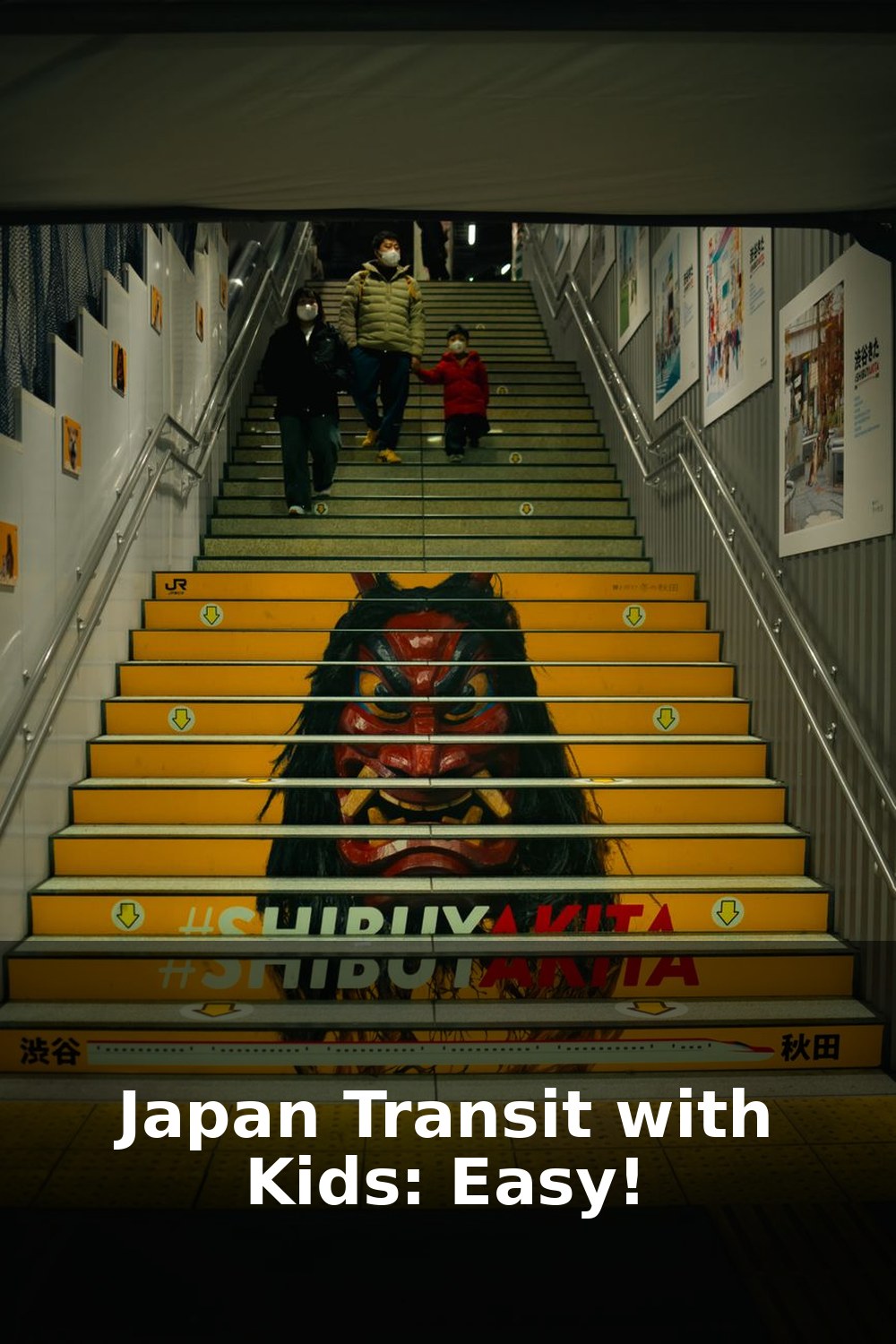
Photo by Tama Utama on Pexels
Traveling Japan's excellent public transport with kids in 2026 is actually quite simple! Smart use of child IC cards will automatically give you half-fare rates, and a few clever stroller tricks can make navigating stations a breeze. Get ready to explore with ease, even when you're wrangling little ones and hauling your latest souvenirs.
- Child IC cards (like こども用Suica) automatically apply half-fare rates for kids aged 6-11.
- Infants (1-6 years) and babies (under 1) generally travel free, with specific rules for groups or reserved seats.
- Stroller rental services like Bebical are available at major stations and airports for flexible use.
- Tokyo Metro offers multilingual information, including English, for easy route planning.
IC Cards: Your Family's Travel Buddy
Leave your yen coins in your pocket and ditch the confusing fare charts. Japan's IC cards are an absolute lifesaver for families on the go. For children aged 6 to 11 (elementary school students), dedicated Child IC Cards are available, such as こども用Suica, こどもICOCA, and 小児用nimoca. These cards automatically deduct the child fare, which is typically half the adult fare, simplifying every tap through the ticket gate or onto a bus.
You'll spot a child IC card by the distinctive "小" (small) symbol printed on it. These cards stay valid until March 31st of the year your child turns 12 or finishes elementary school. Converting them to an adult card at a service counter is usually a quick, straightforward process – much easier than convincing a toddler to leave the playground!
To purchase a child IC card, you'll need to present a public identification document, like a passport, showing your child's date of birth. Your child must also be present for age verification. Keep in mind that only one child IC card can be issued per child, and it's exclusively for the registered child's use.
Understanding Child Fares and Age Categories
Understanding Japan's age categories is super important for getting the right fares for your crew. It's not always as straightforward as 'under 12', so a quick check now will save you any surprises later.
General Train and Subway Fares:
- Adult (おとな): Generally 12 years old and above (junior high school students and older).
- Child (こども / 小児): 6 to 12 years old (elementary school students). Child fares are typically half the adult fare. For cash fares on JR lines, fractions of 5 yen are often rounded down. However, on Tokyo Metro, cash fares might be rounded up to the nearest 10 yen. For IC card fares, any fractions less than 1 yen are generally rounded down.
- Infant (幼児): 1 to 6 years old (preschoolers).
- Baby (乳児): Under 1 year old.
Good news for parents of very young children: infants and babies usually travel free! One adult or child can bring up to two infants/babies for free. If you have a third infant or baby, a child fare will be required for them. A child fare is also needed if an infant or baby occupies a reserved seat by themselves, travels alone, or is part of a larger group requiring separate seating. So, if your little one demands their own Shinkansen seat, be prepared to pay a child fare.
Some special conditions apply. For JR lines, certain premium tickets like Green car, Gran Class, sleeper car, ride arrangement, and liner tickets cost the same as adult fares for children. If an infant or baby uses a limited express ticket on a limited express train, a child ticket for that segment of the journey is also required.
Bus Fares:
Child bus fares are also typically half the adult fare. When paying cash, rounding rules vary by operator; for example, International Kogyo Bus rounds 5 yen fractions up to the nearest 10 yen, while Tokyu Bus rounds 10 yen fractions up. When paying with cash, you'll usually need to inform the bus driver that you're paying a child fare, unless you're using a child IC card.
| Age Category | Age Range | Fare Rule (General) |
|---|---|---|
| Adult (おとな) | 12+ years | Full Adult Fare |
| Child (こども) | 6 to 11 years | Half Adult Fare |
| Infant (幼児) | 1 to 6 years | Free* |
| Baby (乳児) | Under 1 year | Free* |
*One adult/child can accompany up to two infants/babies for free. A child fare is required for additional infants/babies, or if they occupy a reserved seat alone.
Stroller Access and Rental Services
Don't let the thought of busy stations and crowded trains with a stroller scare you off! Japan has some fantastic services and practical tips to make it much easier for families. Sometimes, the best strategy is to rent a stroller in Japan only when you need it.
The Bebical (ベビカル) Stroller Rental Service is a particularly helpful option for families. This service allows you to rent strollers at over 275 locations across Japan. These include major JR East stations (like Tokyo, Ueno, Yokohama, Shinjuku, Narita Airport, Niigata, and Sendai), various airports, hotels, and tourist facilities. No more lugging a stroller through multiple flights if you don't need to!
Pricing for Bebical strollers starts at 250 yen for the first hour, then 100 yen for every 30 minutes, with a maximum daily charge of 1,500 yen per 12 hours (as of 2026, confirm on the official site). Strollers can be rented for a minimum of 1 hour up to 7 days. For multi-day rentals, it's always advisable to confirm the maximum charge in advance to avoid any surprises. Reservations can be made up to 14 days ahead or for immediate use via the Bebical website or app, and payment is conveniently processed by credit card through the platform. Locations like Nagoya Subway Sakae Station (currently a trial) offer Combi A-type strollers (SC61), which are suitable for infants aged 1 to 48 months, accommodating children up to 18 kg.
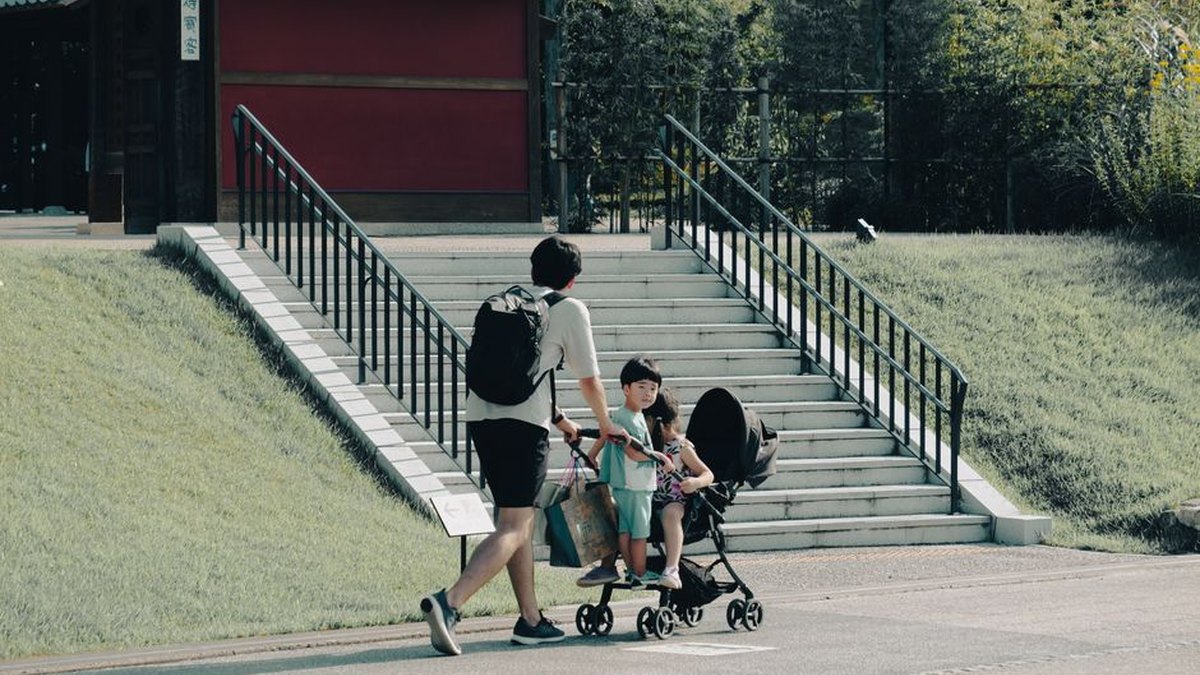
Bebical takes hygiene seriously: strollers are regularly cleaned, inspected by staff, and disinfectant spray is available at their stands. You can relax knowing your little one is riding in comfort and cleanliness. When using your own stroller on buses, as seen with Yokohama City Bus, it's always polite and practical to inform the bus driver when boarding and lift the front wheels for easy access. Move to the designated stroller area if one is available.
Planning Your Routes with Multilingual Support
Tokyo Metro's official website is a fantastic resource, offering information in Japanese, English, Korean, Chinese (Simplified and Traditional), and Thai (as of 2026, confirm on the official site). This multilingual support makes it much easier to plan your journeys, check fares, and even look up station facilities before you head out. This helps avoid those 'lost in translation' moments and keeps your family adventures running smoothly!
Booking the Shinkansen with a family: a step-by-step
“Take the bullet train” is the easy part. Here is how families actually book it with little kids, big suitcases and a stroller. Fares and rules change — confirm on the official sites before you travel (as of 2026).
- Reserve seats — don’t wing it with kids. Book reserved seats in English on the official apps: smartEX for the Tokaido/Sanyo/Kyushu Shinkansen (Tokyo–Kyoto–Osaka–Hiroshima) or EKINET for JR East. You can also book at a JR ticket office (Midori-no-madoguchi) or a green ticket machine. Reserve a few days ahead in peak seasons.
- Book the oversized-baggage seats for big suitcases. On the Tokaido/Sanyo/Kyushu Shinkansen, a bag whose height + width + depth totals 160–250 cm needs a free “oversized baggage” seat reservation — the last-row seats, with a storage area behind them. Reserving it costs nothing extra; turning up without one is a ¥1,000 surcharge on board. Bags over 250 cm aren’t allowed.
- Strollers: book the last row. Fold the stroller and store it in the space behind the rear seats, so reserve the last row of the car. A folded stroller doesn’t need its own reservation.
- Know the kids’ fares. Up to two children under 6 ride free per paying adult if they sit on your lap; if a young child takes their own seat, you pay a child fare. Children aged 6–11 pay half the adult fare with their own reserved seat.
- Budget roughly. A Tokyo–Kyoto reserved seat is around ¥14,000 per adult one way, so two adults + one 6–11 child is roughly ¥35,000 one way — confirm exact fares for your dates on the official site. A Japan Rail Pass can be cheaper if you take several long trips.
- On the day. Arrive 20–30 minutes early, use station elevators (most are stroller-accessible), and grab ekiben (station bento boxes) so hungry kids are sorted for the ride.
Same trip, very different kids: tailoring by age
“Young children” covers a lot of ground. Here is how to adjust the pace and the picks by age — every child is different, so treat this as a starting point.
| Age | Pace & logistics | What tends to land |
|---|---|---|
| 0–2 (babies & toddlers) | Plan around naps — one main outing a day, then back for a midday rest. Bring or rent a stroller and use the nursing/diaper rooms in department stores and big stations. Under-6s ride trains free on a lap. | Parks and gardens, gentle animal encounters, sensory spots and short boat rides. Keep it low-key. |
| 3–5 (preschoolers) | Many still need a rest or a quiet hour. Short attention spans — build in downtime, keep snacks handy, and a stroller still helps on long days. | Character parks (Tokyo Disneyland over the bigger-ride DisneySea), aquariums, hands-on museums, train-spotting. |
| 6–12 (school age) | Can handle fuller days with breaks and more walking. They pay a child fare (about half) on trains and many attractions — and love being involved in choosing the day’s plan. | teamLab, theme parks with bigger rides, interactive and science museums, ramen- or food-making, a day trip by Shinkansen. |
Mixed ages? Anchor the day on the youngest child’s nap and energy, then add one “big-kid” activity the older ones will love.
FAQ: Japan Public Transport with Kids
Can I use my child's IC card on any public transport in Japan?
Child IC cards like こども用Suica, こどもICOCA, and 小児用nimoca are widely accepted across most major train, subway, and bus lines throughout Japan's biggest cities and regions. However, there are some local lines or very specific regional buses that might not accept them. Always check for the IC card logo (e.g., Suica, Pasmo, Icoca) at the station or bus stop if you're venturing off the main routes.
What if my child turns 12 during our trip to Japan?
If your child turns 12 during your trip, their child IC card remains valid until March 31st of that year. So, if their birthday falls within your travel dates but before March 31st, their child card will still work. If your trip extends beyond March 31st of the year they turn 12, their child card will technically be expired and may need to be converted to an adult card or you'll need to purchase adult tickets for them.
Are strollers always allowed on crowded trains and buses?
While strollers are generally allowed on public transport, during peak rush hours (typically 7-9 AM and 5-7 PM in major cities), it can be extremely difficult and uncomfortable to navigate with a stroller. Many locals fold their strollers during these times. On buses, it's common practice to fold strollers if the bus is crowded, and always inform the driver upon boarding. Always prioritize safety and consider using a baby carrier during very busy periods.
Can I buy a child IC card for my kids online before arriving in Japan?
Unfortunately, child IC cards require an in-person purchase. You'll need to buy them at a ticket counter (e.g., JR Midori-no-Madoguchi) at major stations. Both the child and their passport (or other identification with date of birth) must be present for age verification. This ensures the cards are issued correctly with the half-fare discount tied to the child's age.