Staying Connected in Japan with Kids: eSIMs & WiFi (2026)
AI-assisted guide, fact-checked against official and primary sources — not a sponsored stay. We don’t claim to have personally visited every place; we verify details, cite official sites, and flag anything you should confirm before you go. How we make these guides →
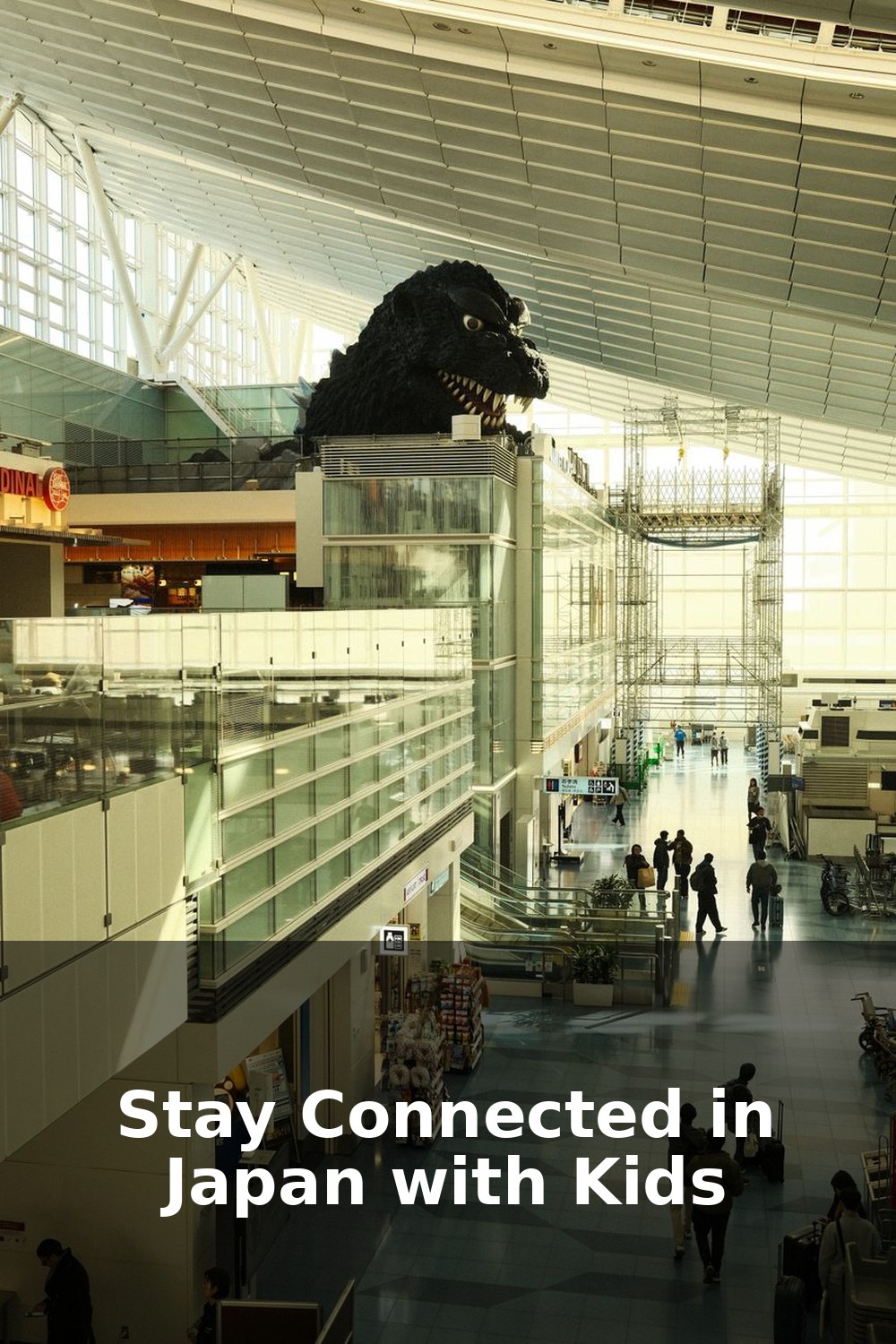
Photo by Garrison Gao on Pexels
Keeping your family connected while exploring Japan is surprisingly easy, thanks to excellent options like eSIMs, Pocket WiFi devices, and traditional SIM cards tailored for different family needs and budgets. Whether you're navigating Shibuya with a stroller or trying to translate a menu for a picky eater, reliable internet will be your best travel companion—almost as good as a well-timed snack for a hangry toddler!
- eSIMs offer quick digital activation and flexibility for individual devices, often with excellent data plans from providers like Rakuten Mobile.
- Pocket WiFi is a family favorite, allowing multiple devices (and multiple family members) to share a single, reliable internet connection.
- Physical SIM Cards are a solid option for single-device users looking for straightforward prepaid data plans from carriers like NTT Docomo and SoftBank.
- Airport Facilities like free stroller rentals and dedicated nursing rooms make arrivals and departures smoother for parents.
Choosing Your Connection: eSIMs, Pocket WiFi, or SIM Cards
Choosing your family's perfect connection in Japan boils down to your crew's size, how many gadgets you're bringing, and your data appetite. Each option has its own perks, making some a better fit for your travel style.
eSIMs: Digital Convenience for Modern Families
Embedded SIMs (eSIMs) are becoming a go-to for many travelers because they're simply so easy to use. You can activate them digitally, often before you even land, which means immediate connectivity upon arrival – a godsend when you're juggling luggage and jet-lagged children. No more hunting for physical SIM card counters after a long flight!
- Rakuten Mobile eSIM: The "Rakuten Saikyo Plan" offers a tiered pricing structure that can be very appealing for families. For up to 3GB, it's 1,078 JPY/month (approximately $7.00 USD), moving to 2,178 JPY/month (approximately $14.00 USD) for 3GB-20GB, and 3,278 JPY/month (approximately $21.00 USD) for unlimited data beyond 20GB. All prices include tax (as of 2026, confirm on the official site). Domestic calls are free using the "Rakuten Link" app, and international calls to certain countries are also free or low-cost via the app. What's especially handy for international travelers is the included international roaming of up to 2GB per month across 144 countries/regions without extra charge. After 2GB, speeds reduce to 128kbps, but you can top up high-speed data for 500 JPY (approximately $3.20 USD) per 1GB (as of 2026, confirm on the official site). Activation can take as little as 15 minutes, which means you could be online before your kids have even finished arguing over who gets the window seat on the airport express. From January 2025, Rakuten Communications plans to introduce an "eSIM Plan Reservation" feature specifically for foreign visitors, making it even easier.
- MVNOs (Mobile Virtual Network Operators): Other providers like LINEMO offer competitive plans, such as 3GB for 990 JPY/month (approximately $6.40 USD) with unlimited LINE app usage (messaging and calls) (as of 2026, confirm on the official site). This is great if your family already relies on LINE for communication.
For hassle-free, instant connectivity right when you land, an eSIM is a seriously smart move. Stay connected & navigate easily — get a Japan eSIM.
Pocket WiFi: The Family Data Hub
If you're traveling with multiple devices – phones for parents, tablets for kids' entertainment, maybe even a smartwatch – a Pocket WiFi device often wins as the most practical solution for family trips. It acts like a portable hotspot, allowing several devices to connect simultaneously, typically around five. This means no more arguments over who gets the data! (Well, fewer arguments, at least.)
- General Features & Pricing: Many services offer unlimited data plans, which is perfect for streaming kid-friendly shows on the go or uploading endless photos of your little ones trying sushi for the first time. Some plans may have daily limits, like 5GB/day, which is still plenty for most family adventures.
- NINJA WiFi offers unlimited data (SoftBank network) from 440 JPY (approximately $2.80 USD) per day (as of 2026, confirm on the official site).
- eConnect Japan has a 20GB plan for 5,280 JPY (approximately $34.00 USD) for a 7-day rental or 4,950 JPY (approximately $32.00 USD) for 4 days (as of 2026, confirm on the official site).
- Japan WiFi Rental offers a monthly plan with 50GB data (approximately 1.6GB/day). Be aware that loss of the device incurs a fee of 16,500 JPY (approximately $106.00 USD) plus a 19,800 JPY (approximately $127.00 USD) cancellation fee (as of 2026, confirm on the official site), so keep it close!
- Wi-Fi RENTAL.COM offers a popular SoftBank line plan with a 5GB/day limit for 6,600 JPY/month (approximately $42.50 USD) (as of 2026, confirm on the official site).
Pickup & Return Made Easy
Pickup options are flexible: you can collect your Pocket WiFi at airport counters (some even offer 24-hour service for those red-eye flights with demanding toddlers), have it delivered to your hotel, ryokan, or even a friend's home. Some services allow convenience store pickup. Returning the device is typically just as easy, often via a postal box using a provided pre-paid envelope or at airport counters. For airport returns to a counter during business hours, that day counts as the return day. If using a return box outside business hours, the next morning's collection day is considered the return day, so plan accordingly to avoid extra charges.
SIM Cards: Reliable & Straightforward
For those who prefer a physical card or have devices that don't support eSIMs, traditional prepaid SIM cards are widely available. They're easy to purchase, require no credit checks, and come without cancellation fees, which is ideal for shorter family trips.
- NTT Docomo Japan Welcome SIM: Offers prepaid SIMs for foreign visitors, with various plans valid for 15 days. "Plan 0" is free, providing unlimited data at 128Kbps by watching ads before arrival. High-speed data can be added (100MB for 200 JPY + tax, 500MB for 700 JPY + tax) or earned through more ads/surveys (as of 2026, confirm on the official site). "Plan 1000" costs 1,000 JPY (approximately $6.40 USD, tax excluded) for unlimited 128Kbps data, while "Plan 1700" is 1,700 JPY (approximately $11.00 USD, tax excluded) for 500MB of high-speed data (up to 682Mbps download) plus unlimited 128Kbps data (as of 2026, confirm on the official site). SIM cards (standard, microSIM, nanoSIM) are collected at major airports (Haneda, Narita, Kansai) and other facilities after online pre-application. Good news: APN settings are not needed, saving you a minor headache.
- SoftBank Prepaid SIM for Travel: This costs 2,480 JPY (approximately $16.00 USD, tax excluded) at SoftBank shops and electronics retailers (airport counters might have higher prices) (as of 2026, confirm on the official site). It provides 3GB of data for 31 days (as of March 2018; check for current campaigns). Additional 500MB data can be purchased for 1,500 JPY (approximately $9.60 USD) (as of 2026, confirm on the official site). Remember, passport registration is required. You can pick these up at SoftBank shops, certain electronics retailers (like Air Bic Camera at Narita Airport T2, Haneda Airport International Terminal), and airport SoftBank rental counters.
- Bic Camera Prepaid SIMs: Various "Nippon SIM for Japan" prepaid data SIMs (Docomo network) are available, such as 30-day plans with 10GB, 30GB, or 50GB. A 180-day, 100GB plan costs 14,980 JPY (approximately $96.00 USD) (as of 2026, confirm on the official site).
- J-FITSIM: Prepaid SIMs available from approximately 600 JPY/month (approximately $3.80 USD) (as of 2026, confirm on the official site). These don't require a credit check and offer long-term plans (1 year or more), with the first month often free.
Connectivity Options at a Glance for Families
Here’s a quick comparison to help you weigh your options:
| Feature | eSIM | Pocket WiFi | Physical SIM Card |
|---|---|---|---|
| Best For | Single device, quick activation, flexible plans | Multiple devices, families/groups, heavy data users | Single device, no credit check, easy purchase |
| Data Sharing | Typically not easily shared | Yes, multiple devices (approx. 5) | Not easily shared |
| Activation | Digital, often 15 mins | Collect device, simple setup | Physical insertion, some pre-application |
| Cost Range (per month/day) | Approx. $6.40-$21 monthly | Approx. $2.80-$42.50 daily/monthly | Approx. $3.80-$96 monthly (for prepaid plans) |
Making Travel Easier: Child Facilities at Japanese Airports
Beyond staying connected, knowing exactly where to find family-friendly amenities makes all the difference, especially when you're navigating an airport with little ones in tow. Those precious minutes when your toddler is happily contained in a stroller, or your baby has a private nursing spot, can feel like pure gold.
Stroller Access and Rental
Navigating airports with tired kids and luggage is a challenge. Thankfully, Japan's airports often have excellent facilities:
- Narita International Airport: Offers free stroller rental at information counters throughout all terminals. Arriving passengers can pick them up after immigration and return them to any information counter. So, your 3-year-old doesn't have to attempt a solo sprint through customs.
- Haneda Airport:
- Monokari (モノカリ): You can rent strollers from 200 JPY (approximately $1.30 USD) per day (as of 2026, confirm on the official site). Models include Cybex Melio, Cybex Libelle, and Combi Sugocal/Mechacal. Pickup is conveniently located at the airport post office.
- NPO Barrier-Free Network Conference (NPO法人バリアフリーネットワーク会議): Provides stroller and wheelchair rental on the 1st floor of Haneda Airport Terminal 1, operating from 10:00 to 18:00 daily (as of 2026, confirm on the official site). Reservations can be made via email ([email protected]) or by phone (03-5757-8205, Japanese only).
- Paid Stroller Rental (for outside-airport use): Available at Haneda (though not in Terminal 3). Phone inquiries are in Japanese only (090-1940-9578, 10:00-18:00) (as of 2026, confirm on the official site). Non-Japanese speakers should use the email contact for the Barrier-Free Network Conference.
- Nice Baby (ナイスベビー): Offers airport stroller rental with pickup and return at JAL ABC counters (only in Haneda Terminal 3).
- Naha Airport (and similar facilities at Nanjo Ishigaki Airport): You'll find elevators and escalators throughout for easy movement with strollers, making it much less of an uphill battle.
- Airline Assistance: Airlines like JAL provide assistance for passengers traveling with babies or during pregnancy; contacting your airline in advance is always a good idea. JAL's phone number is 0120-25-0001 or 03-4330-2525 (7:00-20:00 daily) (as of 2026, confirm on the official site).
Need more inspiration for your family adventure? Book skip-the-line family tickets & experiences on Klook.
Nursing Rooms & Diaper Changing Facilities
Finding a clean, private space for nursing or changing diapers is a top priority for many parents. Japanese airports excel in this area:
- Narita International Airport: "Baby Rooms" are thoughtfully located throughout the terminals. These are well-equipped with nursing booths, diaper changing tables, washbasins, and hot water dispensers for formula. Crucially, men are permitted to use all facilities except the private nursing booths, ensuring partners can help out.
- Chubu Centrair International Airport (Nagoya): Nursing rooms are integrated with most restrooms in Terminal 1. They are private, offering diaper changing tables, changing tables (in some), nursing chairs, and washbasins. Baby care rooms in "Flight of Dreams" and Terminal 2 also contain nursing rooms, and hot water for preparing milk is readily available – perfect for those middle-of-the-night feedings or just before your flight.
- Komatsu Airport: Offers free baby care rooms including two lockable nursing rooms (accessible to men), one diaper changing table, one hot/cold water dispenser, a diaper vending machine (also selling drinks), a hot water pot, and a microwave. Everything you might need for a quick refresh!
- Naha Airport (and similar facilities at Nanjo Ishigaki Airport): Multi-purpose restrooms are equipped with baby chairs and diaper changing tables in some stalls. Dedicated nursing rooms (ベビーケアルーム) for nursing and diaper changing are located on the 1st floor central entrance of the Domestic Terminal, and on the 2nd floor departure lounges of both Domestic and International Terminals.
Same trip, very different kids: tailoring by age
“Young children” covers a lot of ground. Here is how to adjust the pace and the picks by age — every child is different, so treat this as a starting point.
| Age | Pace & logistics | What tends to land |
|---|---|---|
| 0–2 (babies & toddlers) | Plan around naps — one main outing a day, then back for a midday rest. Bring or rent a stroller and use the nursing/diaper rooms in department stores and big stations. Under-6s ride trains free on a lap. | Parks and gardens, gentle animal encounters, sensory spots and short boat rides. Keep it low-key. |
| 3–5 (preschoolers) | Many still need a rest or a quiet hour. Short attention spans — build in downtime, keep snacks handy, and a stroller still helps on long days. | Character parks (Tokyo Disneyland over the bigger-ride DisneySea), aquariums, hands-on museums, train-spotting. |
| 6–12 (school age) | Can handle fuller days with breaks and more walking. They pay a child fare (about half) on trains and many attractions — and love being involved in choosing the day’s plan. | teamLab, theme parks with bigger rides, interactive and science museums, ramen- or food-making, a day trip by Shinkansen. |
Mixed ages? Anchor the day on the youngest child’s nap and energy, then add one “big-kid” activity the older ones will love.
FAQ
Is Pocket WiFi better than an eSIM for families visiting Japan?
For most families with multiple devices (phones, tablets) or several people who need internet access, Pocket WiFi is often the more convenient and cost-effective choice as it acts as a shared hotspot. eSIMs are great for individual devices and digital-savvy travelers, offering quick activation.
Can I rent a stroller at Tokyo airports like Narita or Haneda?
Yes, both Narita International Airport and Haneda Airport offer stroller rental services. Narita provides free rentals at information counters. Haneda has paid rental options like Monokari and NPO Barrier-Free Network Conference, some with airport post office pickup.
How much does an eSIM for Japan typically cost?
eSIM plans vary, but for example, Rakuten Mobile offers tiered pricing starting around 1,078 JPY/month (approximately $7.00 USD) for up to 3GB, with unlimited data options for around 3,278 JPY/month (approximately $21.00 USD) (as of 2026, confirm on the official site).
Are nursing rooms and diaper changing facilities common in Japanese airports?
Yes, Japanese airports are generally very well-equipped with "Baby Rooms" or nursing rooms (ベビーケアルーム) that include private nursing booths, changing tables, washbasins, and often hot water dispensers for formula. Men are usually welcome in all but the private nursing booths.
How do I return a Pocket WiFi device in Japan?
Most Pocket WiFi services offer convenient return options, including dropping the device in a postal box with a provided pre-paid envelope or returning it to airport counters. Be mindful of return times and business hours to avoid extra charges.
Can I make international calls using a Japanese SIM or eSIM?
Yes, some eSIM providers like Rakuten Mobile offer free or low-cost international calls via their dedicated app (Rakuten Link). For traditional SIMs, you would typically need to purchase international calling credit or use VoIP apps like WhatsApp or Line over data.
What if I lose a rented Pocket WiFi device?
Loss of a rented Pocket WiFi device can incur significant fees. For example, Japan WiFi Rental charges 16,500 JPY (approximately $106.00 USD) plus a 19,800 JPY (approximately $127.00 USD) cancellation fee (as of 2026, confirm on the official site). Always keep track of your device!
Planning your family's connectivity and understanding airport amenities *before you go* will dramatically reduce travel stress, leaving you with more energy for making unforgettable memories in Japan (and less time wrestling with grumpy kids). Find family rooms & kid-friendly stays in Japan.