Visiting Japan Temples with Kids Respectfully (2026 Guide)
AI-assisted guide, fact-checked against official and primary sources — not a sponsored stay. We don’t claim to have personally visited every place; we verify details, cite official sites, and flag anything you should confirm before you go. How we make these guides →
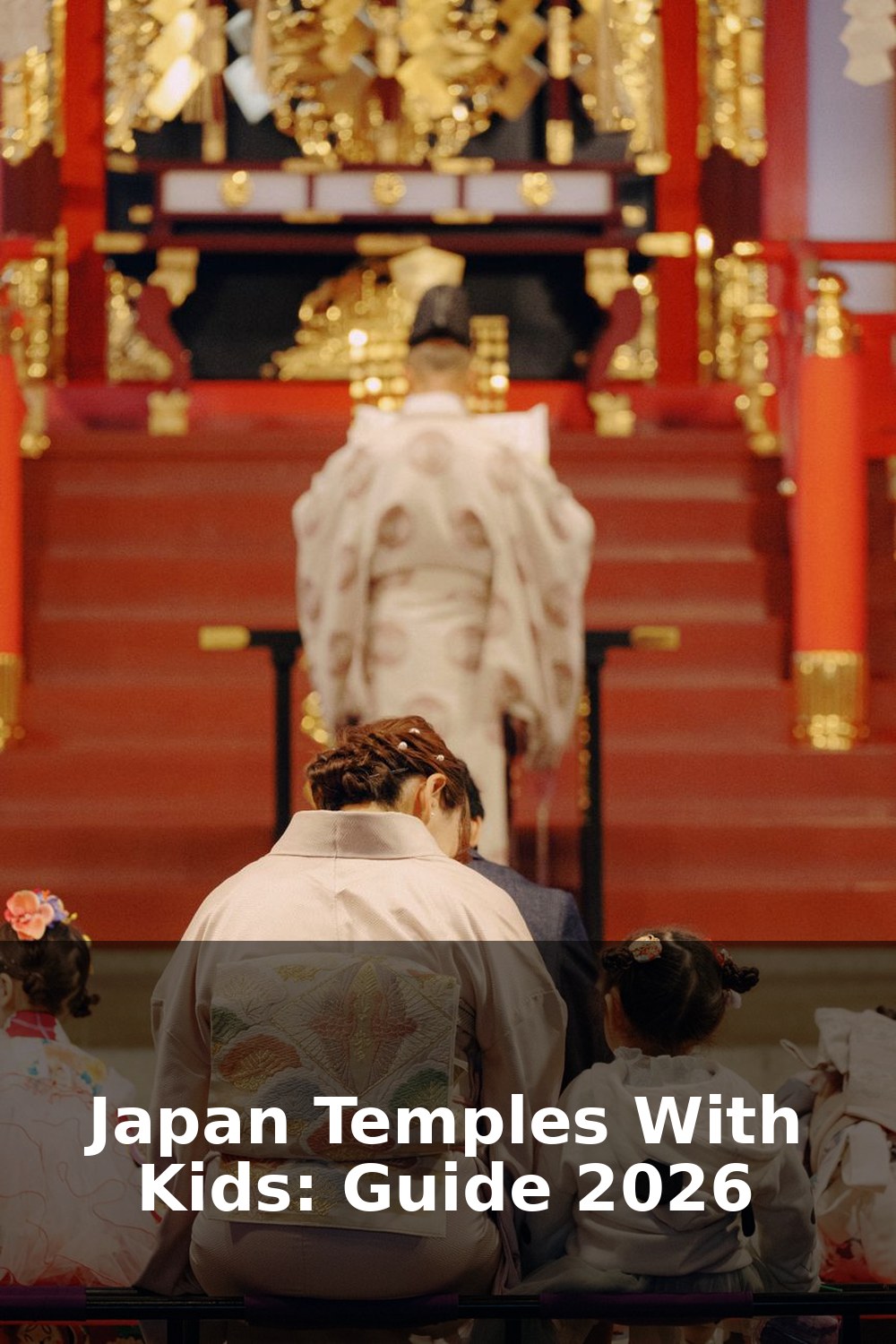
Photo by Liuuu _61 on Pexels
Visiting Japan's serene temples and vibrant shrines with kids respectfully boils down to smart planning, knowing key etiquette, and having a few tricks up your sleeve to keep little ones engaged. Forget the stress of a jet-lagged toddler disrupting a quiet moment; with our 2026 guide, you'll find these cultural gems are entirely navigable and enjoyable for the whole family – sometimes, a well-timed snack is your best bargaining chip!
- Check child admission fees: Many temples, like Kyoto's Kodai-ji, offer free entry for preschoolers and elementary students, while others have significantly discounted rates.
- Prioritize stroller-friendly locations: Tokyo's Senso-ji is a breeze, but mountain routes (like parts of Fushimi Inari) often mean leaving the stroller behind for a carrier.
- Locate nursing/changing rooms in advance: Larger sites or nearby train stations often have these; consider checking the temple's official website or a local tourist office map.
- Plan for engagement: Collect goshuin stamps, try the water purification ritual at the temizuya, or simply observe the quiet beauty.
- Respect cash-only policies: Many smaller temples, and even major ones like Horyu-ji and Kofuku-ji in Nara, still operate on a cash basis for entry.
Understanding Temple & Shrine Etiquette with Kids
Japanese temples and shrines are places of quiet worship and deep cultural meaning. For families, it's all about blending your kids' natural curiosity with a little courtesy. Before heading into a temple's main hall, you'll often spot a temizuya (water basin) for purification. This can be a fun, hands-on activity for kids: show them how to scoop water with the ladle, rinse their left hand, then right, and finally pour a little into their cupped hand to rinse their mouth (spitting the water respectfully to the side, never back into the basin). A quick demonstration from you, or even just letting them watch others, is perfectly fine. At a shrine, the purification is similar, followed by a specific offering ritual: bow twice, clap twice, and bow once more before dropping a coin. A whispered 'We're showing respect' helps explain the clapping!
You'll often need to remove shoes before entering certain temple or shrine buildings. Slip-on shoes for everyone are truly a lifesaver when you're wrangling little feet! Keep voices gentle and discourage running; if toddler energy overflows, gracefully guide them to a quieter outdoor space. Remember, perfection isn't the goal—just a thoughtful effort to respect these beautiful sites.
Practicalities: Admission Fees & Opening Hours
Planning your budget means understanding child entry fees, and Japan's temples often have generous policies for young visitors. For instance, Kyoto's Kodai-ji welcomes elementary school students and younger for free when an adult guardian accompanies them (as of 2026, confirm on the official site), requiring at least one adult per five elementary children. In contrast, Nara's Horyu-ji charges 1,000 yen for elementary students and 1,700 yen for junior high students for its common ticket (Saiin Garan, Daihozoin, Toin Garan) (as of 2026, confirm on the official site). Remember that cash is still king at most temple and shrine entry points across Japan, so keep plenty of yen accessible.

Child Admission Fees at Select Sites
| Site (City) | Elementary Student Fee | Junior/High Student Fee |
|---|---|---|
| Toshodai-ji (Nara) | 200 yen | 400 yen |
| Kofuku-ji Chukondo (Nara) | 200 yen | 300 yen |
| Yakushi-ji (Nara) | 200 yen | 600 yen |
| Kodai-ji (Kyoto) | Free (with adult) | 400 yen |
(All prices as of 2026, confirm on the official site. Special exhibitions may incur additional fees.)
Opening hours vary, so it's always wise to check official websites before your visit, especially during holidays. Senso-ji's main hall in Tokyo is open from 6:00 AM to 5:00 PM (6:30 AM from October to March) (as of 2026, confirm on the official site), offering an early start before crowds. For a more relaxed afternoon, Kodai-ji in Kyoto is open until 5:30 PM (last entry 5:00 PM), with extended hours during special night view periods until 10:00 PM (last entry 9:30 PM) (as of 2026, confirm on the official site). Nara's Horyu-ji adjusts its hours seasonally, typically 8:00 AM to 4:30 PM in winter and 8:00 AM to 5:00 PM through much of the year (as of 2026, confirm on the official site).
Navigating with Little Ones: Strollers & Carriers
The eternal parent question: stroller or carrier? For Japan's temples and shrines, it’s a mix. Some sites are surprisingly stroller-friendly, while others are a literal climb. Take Tokyo's Senso-ji: it offers a smooth, paved path from Kaminarimon to the main hall with very few steps, making it ideal for wheels. Even Kyoto's iconic Kiyomizu-dera, perched on a hillside, has a dedicated wheelchair route and gentler slopes, offering better stroller access than many imagine. To make transitions between sites even smoother, consider booking skip-the-line family tickets & experiences on Klook for nearby attractions.
But be warned: Japanese locals often recommend caution with strollers in extremely crowded areas or at sites with many stairs, gravel paths, or uneven terrain. Kyoto's Fushimi Inari Taisha, famous for its thousands of vermillion torii gates, is a prime example; it does not offer stroller rentals, and its winding mountain paths make a baby carrier a far more practical choice for younger children.
Frequently Asked Questions
Are all Japanese temples and shrines cash-only for admission?
While not all of them are, a significant number of temples and shrines, especially smaller ones and even major sites like Horyu-ji and Kofuku-ji in Nara, still operate on a cash-only basis for entry fees. It's always a good idea to carry enough yen to cover admission for your family, especially outside of major metropolitan areas.
What's the best time to visit temples with kids to avoid crowds?
To enjoy a more peaceful experience and avoid peak crowds, aim to visit right when the temples open. For example, Senso-ji's main hall opens at 6:00 AM (or 6:30 AM in colder months), offering a serene window before the tour groups arrive. Late afternoons, just before closing, can also be quieter, though some facilities might already be winding down.
What should I do if my child has a meltdown at a temple?
It happens! Japanese people are generally understanding. The best approach is to calmly and gently guide your child to a quieter, usually outdoor, area away from the main worship halls. Take a break, offer a snack, or simply let them calm down before attempting to re-enter. The key is respectful removal from the sacred space rather than trying to power through the tantrum inside.
Same trip, very different kids: tailoring by age
“Young children” covers a lot of ground. Here is how to adjust the pace and the picks by age — every child is different, so treat this as a starting point.
| Age | Pace & logistics | What tends to land |
|---|---|---|
| 0–2 (babies & toddlers) | Plan around naps — one main outing a day, then back for a midday rest. Bring or rent a stroller and use the nursing/diaper rooms in department stores and big stations. Under-6s ride trains free on a lap. | Parks and gardens, gentle animal encounters, sensory spots and short boat rides. Keep it low-key. |
| 3–5 (preschoolers) | Many still need a rest or a quiet hour. Short attention spans — build in downtime, keep snacks handy, and a stroller still helps on long days. | Character parks (Tokyo Disneyland over the bigger-ride DisneySea), aquariums, hands-on museums, train-spotting. |
| 6–12 (school age) | Can handle fuller days with breaks and more walking. They pay a child fare (about half) on trains and many attractions — and love being involved in choosing the day’s plan. | teamLab, theme parks with bigger rides, interactive and science museums, ramen- or food-making, a day trip by Shinkansen. |
Mixed ages? Anchor the day on the youngest child’s nap and energy, then add one “big-kid” activity the older ones will love.